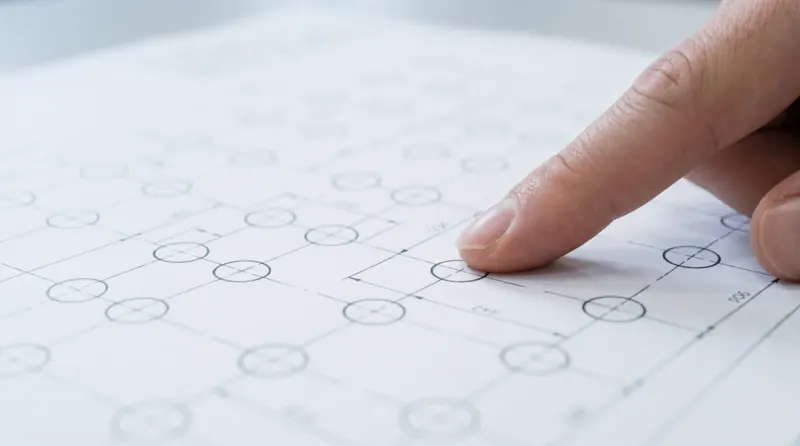
01
Hundreds of holes on one view
Dimensions hide in views, tables and callouts. Some are not on the paper at all — then someone digs them out of the model.
Metallovy turns a drawing into hole coordinates from your zero and a Heidenhain program written the way your shop writes it. Geometry computes every value, AI reads and explains — and the machinist has the final word.
Footage is illustrative · numbers from the demo part DM-2041
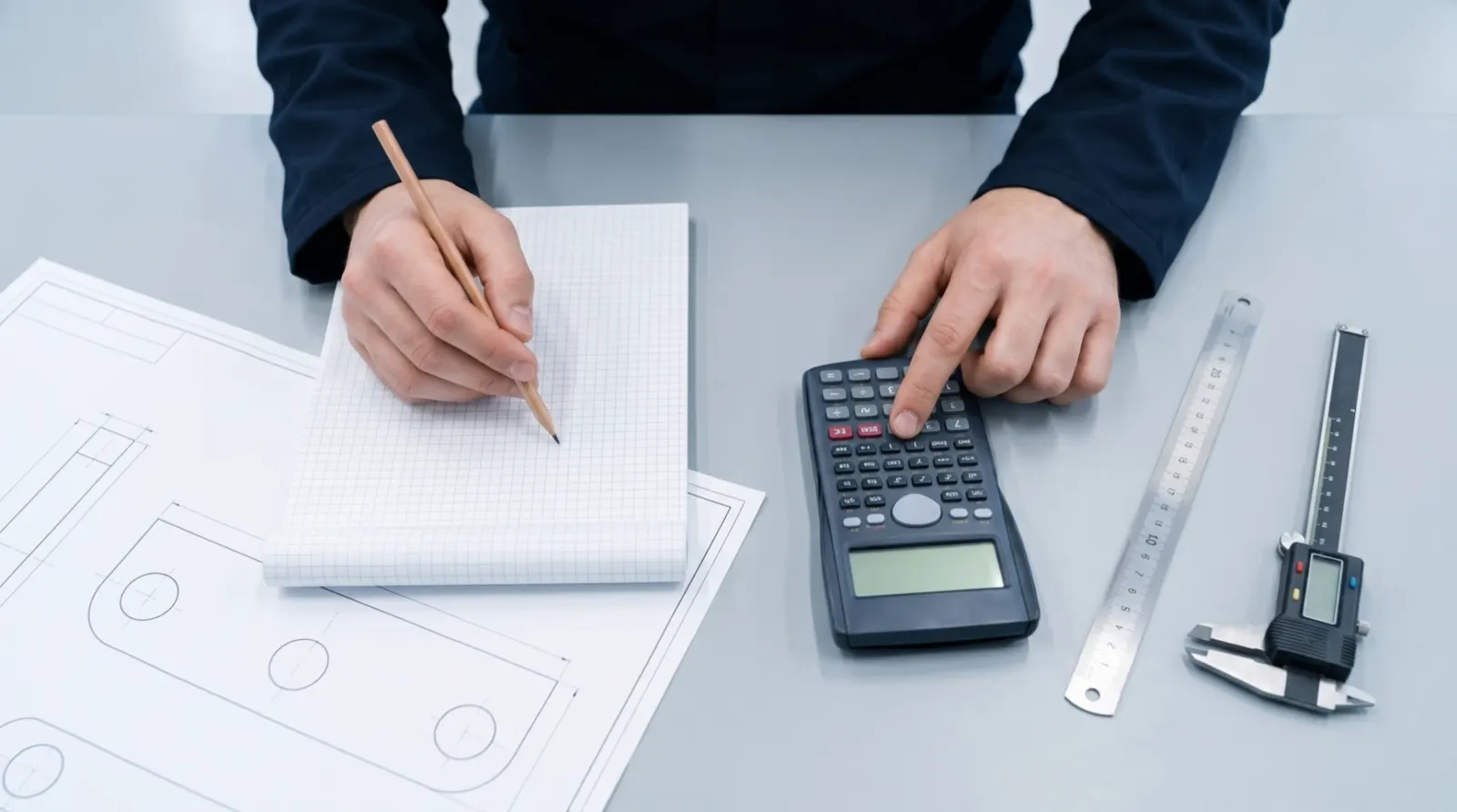
Paper, PDF, sometimes a DXF or a STEP — but never a program, and rarely the coordinates you need from your zero. So the shop transfers them by hand.
Dimensions hide in views, tables and callouts. Some are not on the paper at all — then someone digs them out of the model.
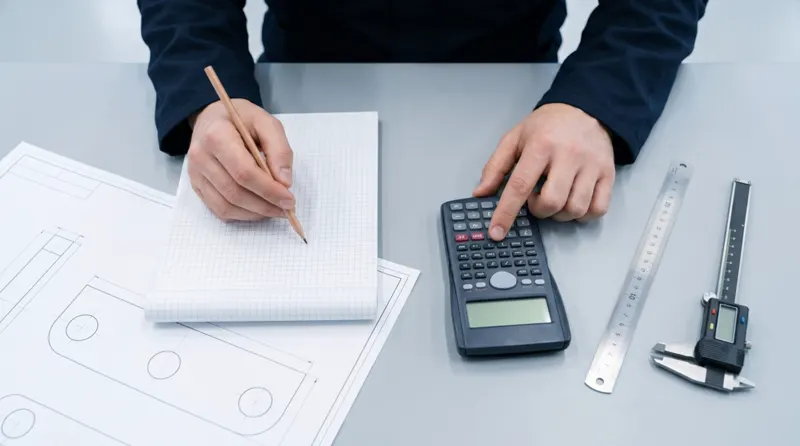
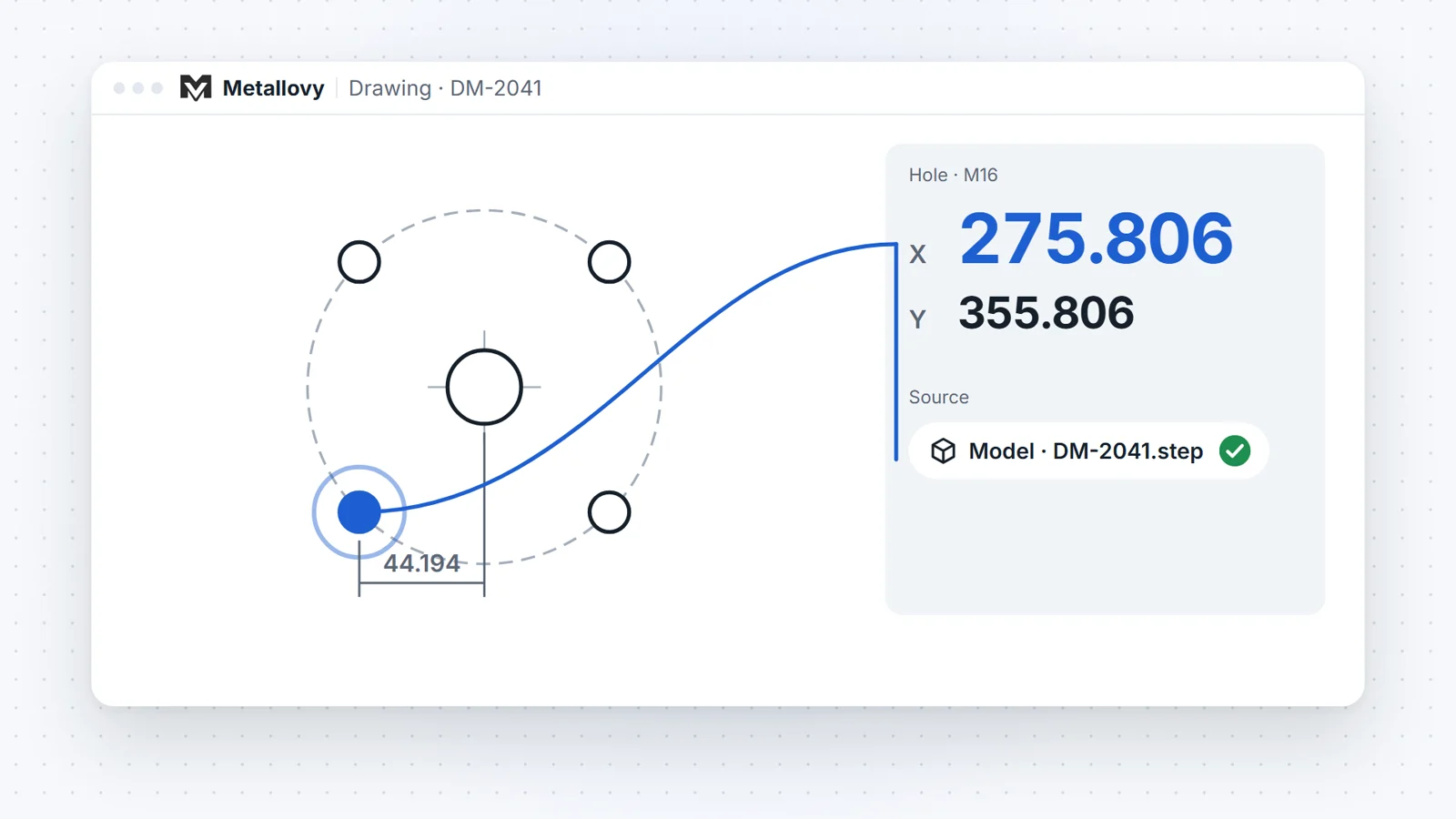
Every point recalculated from the shop's zero. Bolt circles with sine and cosine: 62.5 × sin 45° = 44.194.
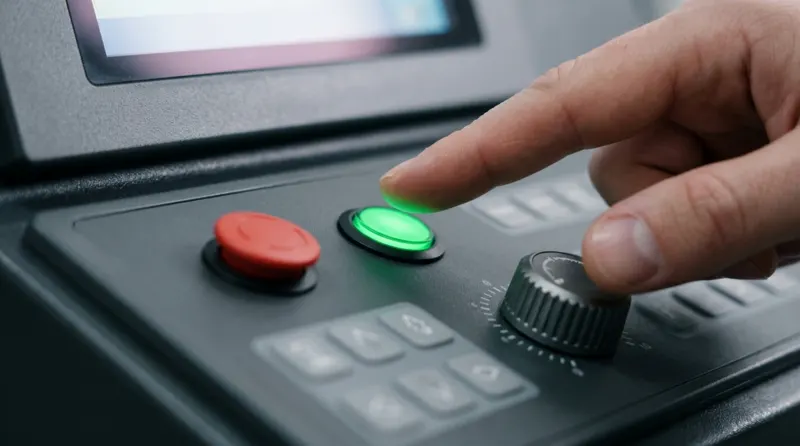
The same points are typed three times: drill, chamfer, thread. On a two-tonne part machined for a day, one wrong digit means scrap or a crash.
STEP, DXF or PDF. Metallovy finds every hole and sorts it into the drawing's own groups — thread, diameter, depth, through or blind, top or bottom.
Click any hole: its coordinates from your zero and their source — a dimension on the drawing or the 3D model. Values read from a scan are marked approximate and never pass as exact.
The AI assistant uses the same actions you have on screen. Pass on a customer's change in plain words — it proposes the edit, and nothing reaches the program until you press Confirm.
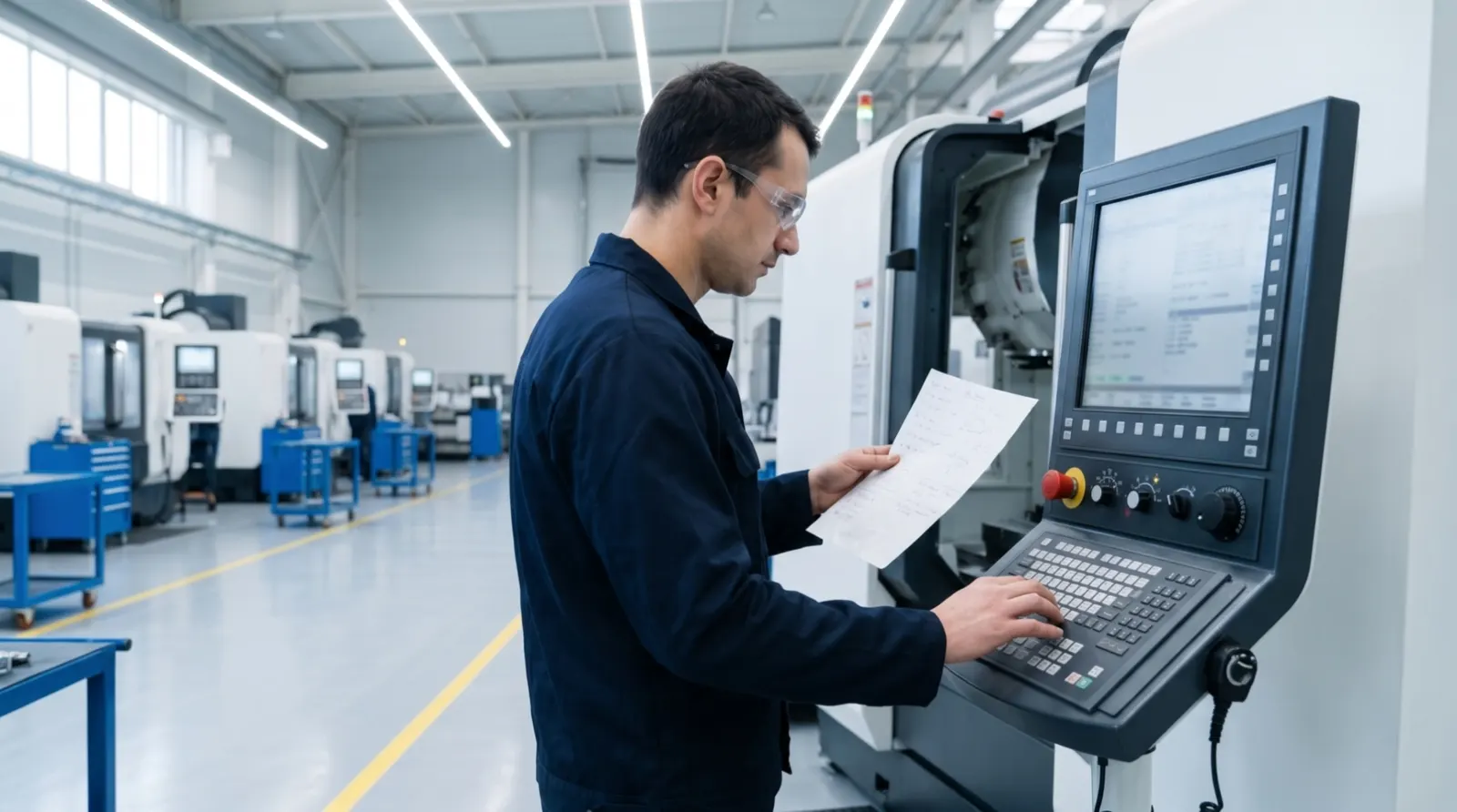
Heidenhain code with a label per hole group, the cycles your shop already uses and tools from your own library — checked against the part before it goes to the machine on a USB stick, as today.
Coordinates, diameters and depths come only from the model, the DXF or a dimension on the drawing — computed by tested code.
It reads callouts, tables and notes, links them to holes, asks when something is missing and explains what it found.
Proposals wait for confirmation. Every change is logged — who, what and when.
On a real order, Metallovy reproduced all 68 points of the shop's own Heidenhain program — within 0.01 mm — and 22 of 22 program steps.
Why every number has a sourceMachinists check and edit every program anyway. So Metallovy learns from the programs your shop already runs: how groups are labelled, which cycles, which tools, where to stop.
32TOOL CALL 111 Z S2200 F180 ;U-Dr.1433L Z+0 W+0 R0 FMAX M9134L X+275.806 Y+355.806 R0 FMAX35L Z+100 W-200 R0 FMAX M3 M836CYCL DEF 203 UNIVERS. SWERLENIE ~ Q201=-43 ;GLUBINA ~ Q203=+0 ;SURFACE COORDINATE ~37LBL "D14"38L X+275.806 Y+355.806 R0 FMAX M9939L Y+444.194 FMAX M9940L X+364.194 FMAX M9941L Y+355.806 FMAX M99 ...48STOP
One workstation for drawing, program and shop floor. Marked honestly.
Centre, axis, diameter, depth and side, grouped by the drawing's hole table.
Base part, welded parts from the STEP assembly, side and zero. A program for every setup.
Works across orders, drawings and programs with the same actions you have. It proposes; you confirm.
Load an existing .H: points over the part, depths, through holes, Q203 and tools checked before the first cut.
Imported from TOOL.T. The generator picks only the tools you actually have.
Operations, STOPs, tools and an estimate of cutting time for every program.
The AI reads the PDF and builds the part from its dimensions; the engineer checks and confirms.
What was added, removed or moved between revisions — and which program lines to fix.
Dimensions read from the image, circles found. Anything measured on a scan is flagged approximate.
German and English notes, tables and revision blocks next to the original, in your language.
Catalogue speeds and feeds for your tool and material, next to what the program uses.
Voice notes at the machine, searchable later: “What do we drill a blind M20 with?”
The data that makes the program also tells the plant where every part is. Operators mark an operation with one tap at each STOP; managers see progress, machine load and what a new order will shift.
The task and setup sheet at the machine. “Operation done” in one tap.
Readiness of every order and the load of every machine, live.
A new order goes into the plan: you see the ship date and what moves.
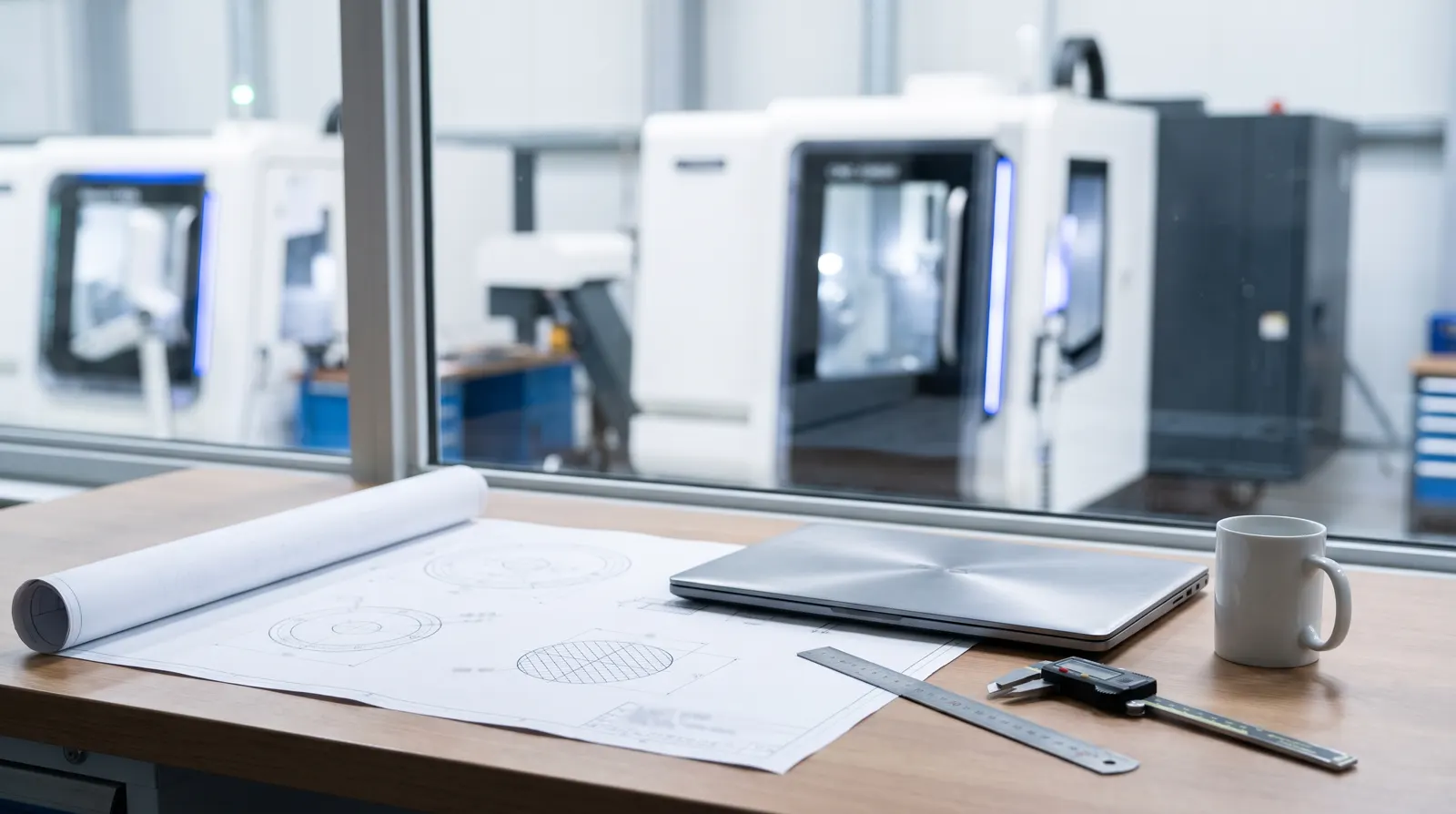
Illustrative scenarios from the kind of shops we build for — from a single boring mill to a plant of a hundred people.
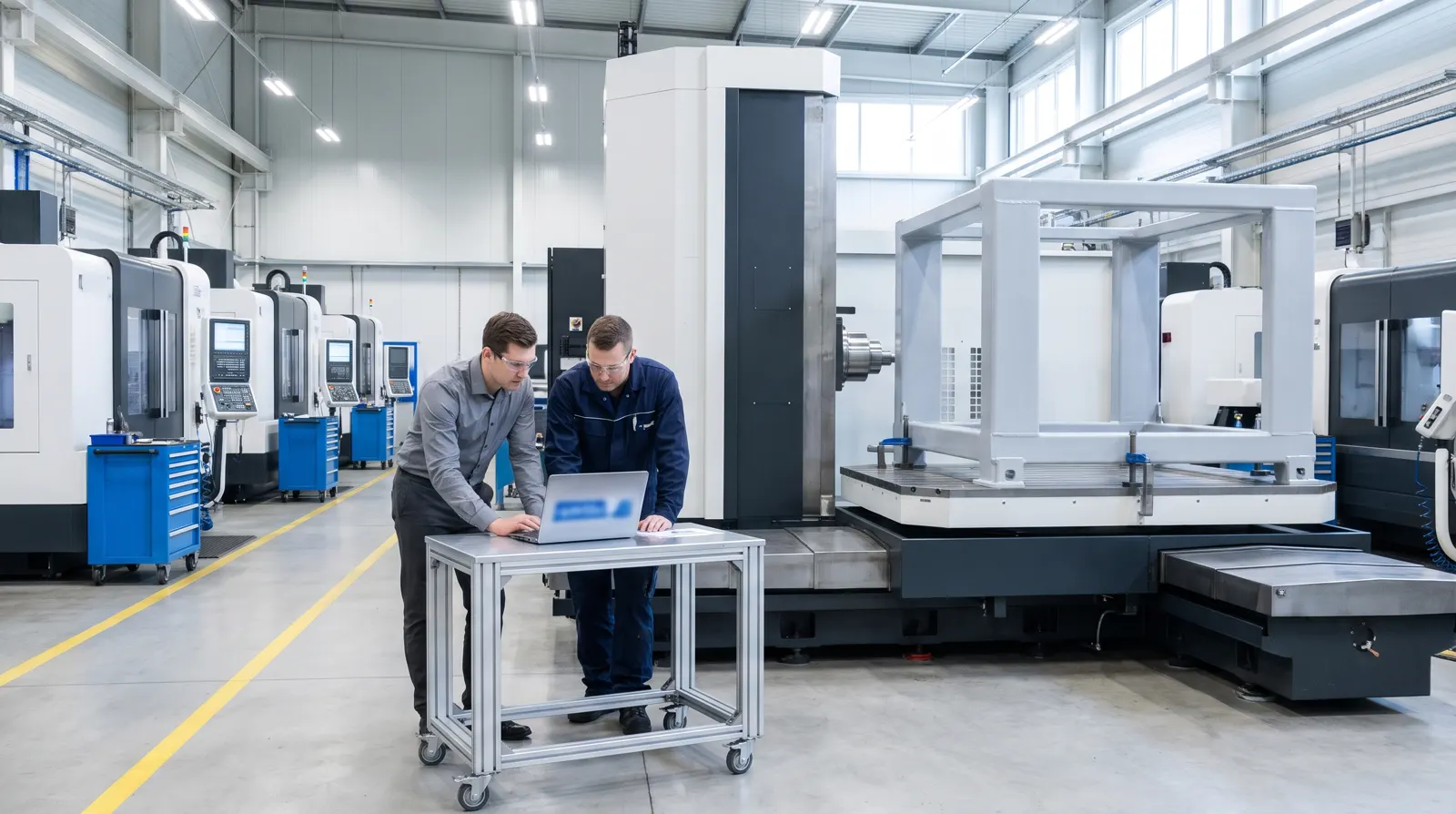
A contract shop in north-east Estonia gets a welded base frame with a PDF, a STEP model and a hole table A to M. How the lead CNC programmer took it to the machine in Metallovy.
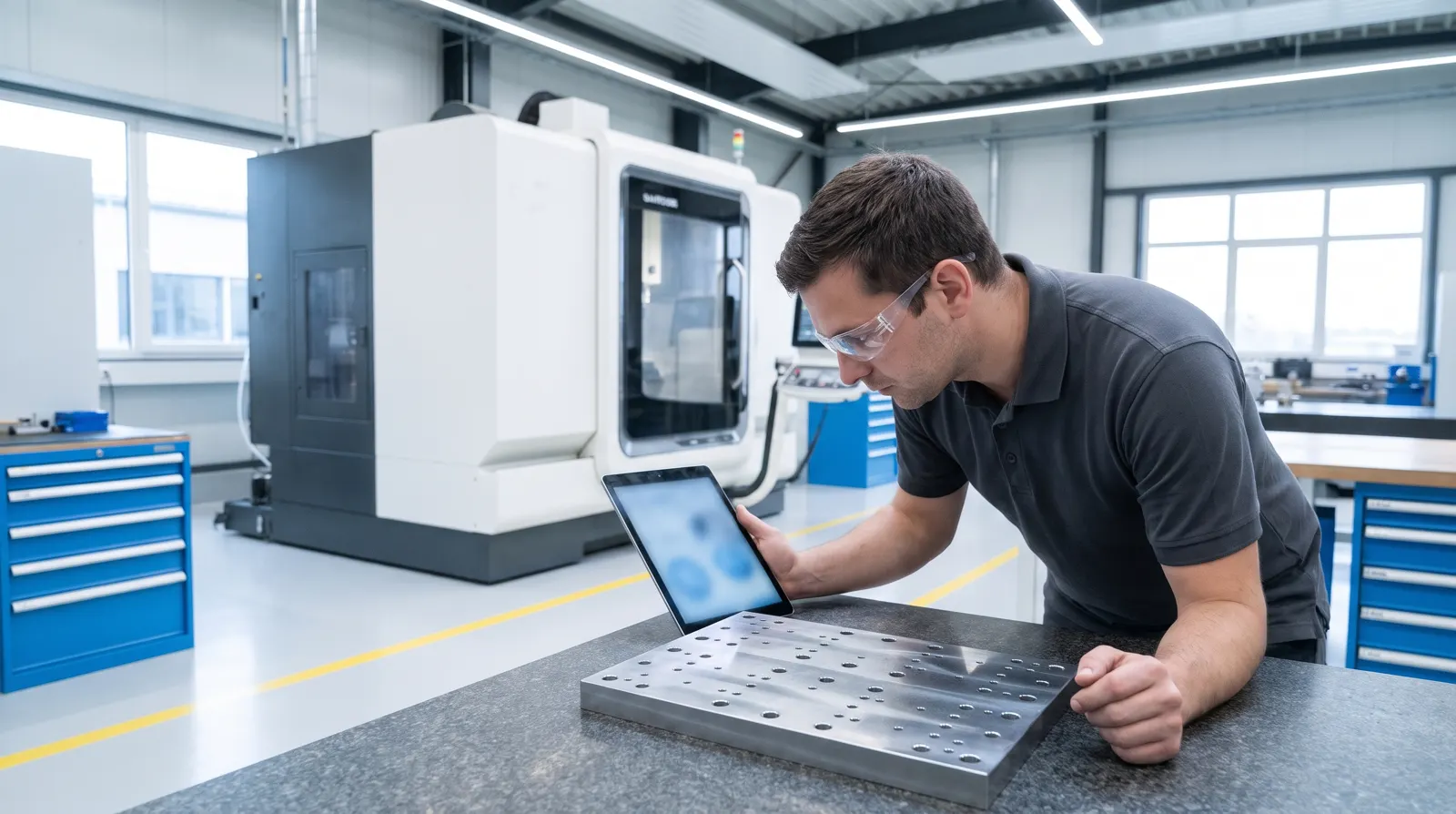
A repeat order arrives with a new drawing revision, and last year's program is in the archive. How a Midlands shop checked it against the new part before cutting metal.
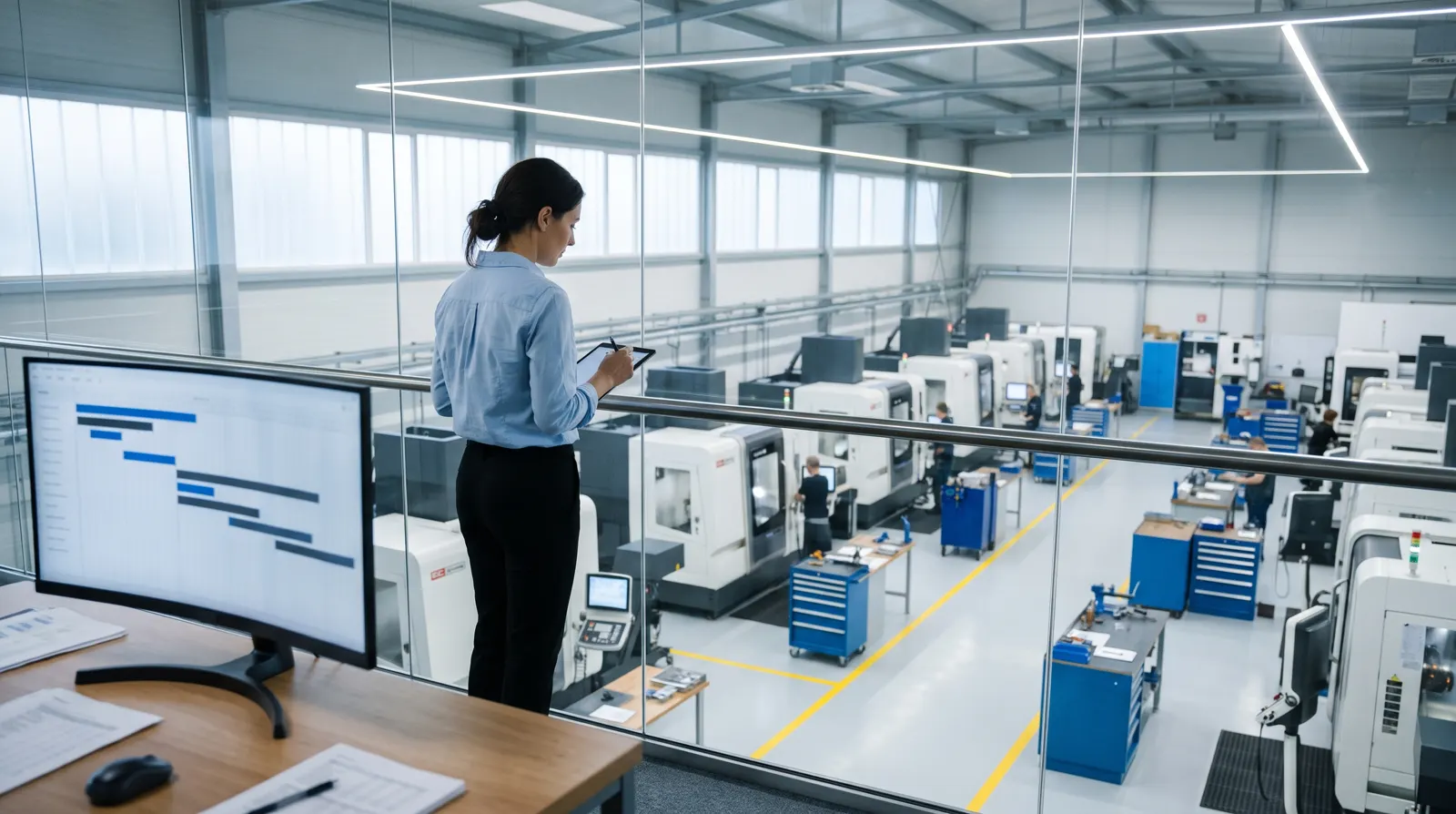
A customer asks whether an urgent order can ship by the 14th. How a plant manager in Lower Saxony answered from the plan instead of a walk round the shop floor.
We are engineers with more than 20 years in engineering and industrial projects, and more than five years of building and deploying AI. We know a wrong digit costs more than a slow afternoon — so we build software that shows its work.
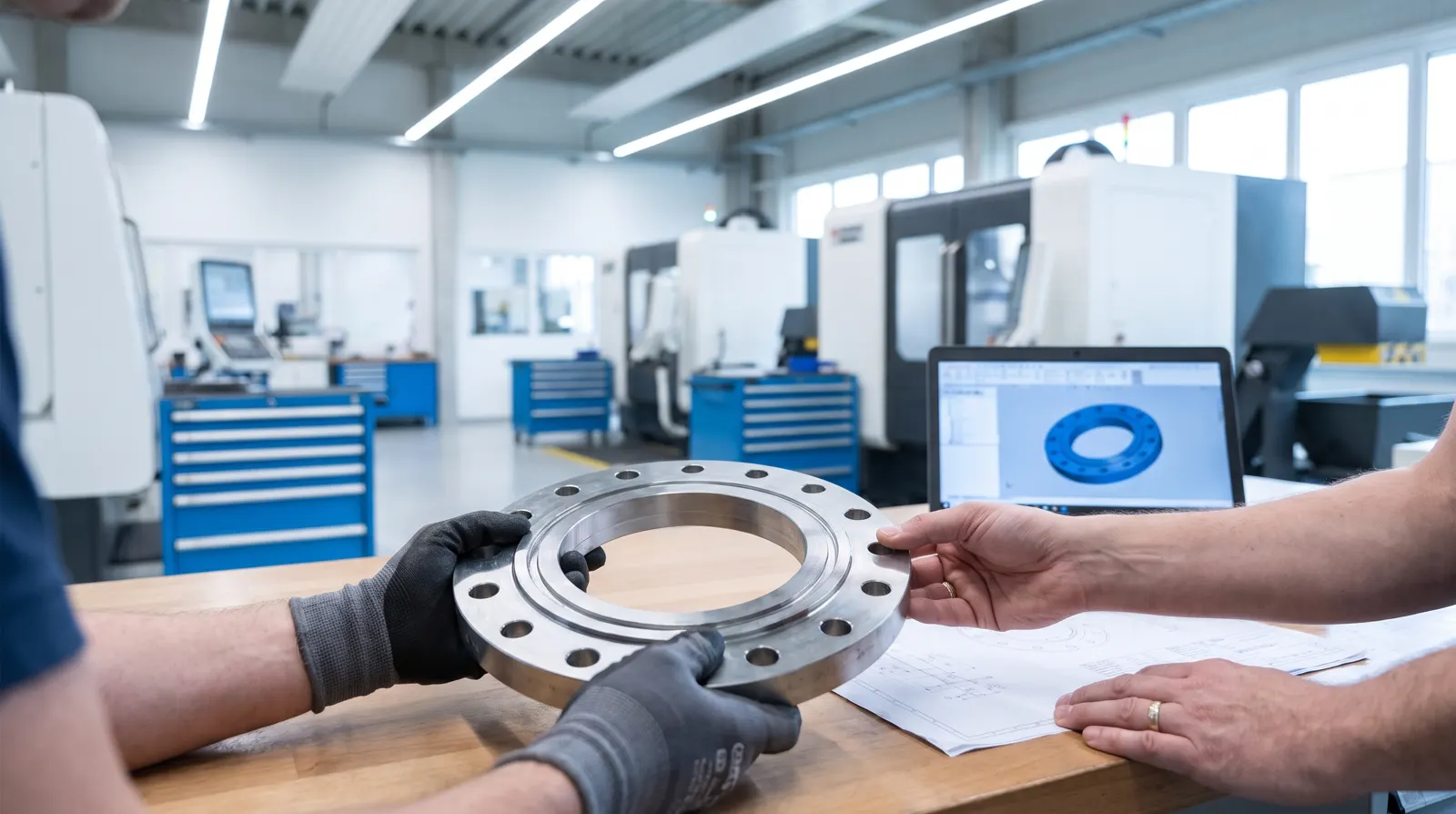
Geometry computes the coordinates, AI reads and explains, a person confirms. Why every value in a Metallovy program can be traced back to where it came from.
Hunting dimensions, recalculating from your zero, bolt circles, typing the same points three times: where transfer errors come from, and a checklist that works without software.
Machinists edit every program anyway, so generated code has to look like their own: one LBL per hole group, the shop's cycles and tool numbers, a STOP after every tool.
Send us one real order and the program your shop wrote for it. We return the coordinates, a program in your style and a line-by-line comparison — then your machinist tries it on the next job.