Will we make the 14th?
A customer asks whether an urgent order can ship by the 14th. How a plant manager in Lower Saxony answered from the plan instead of a walk round the shop floor.
The plant and the question
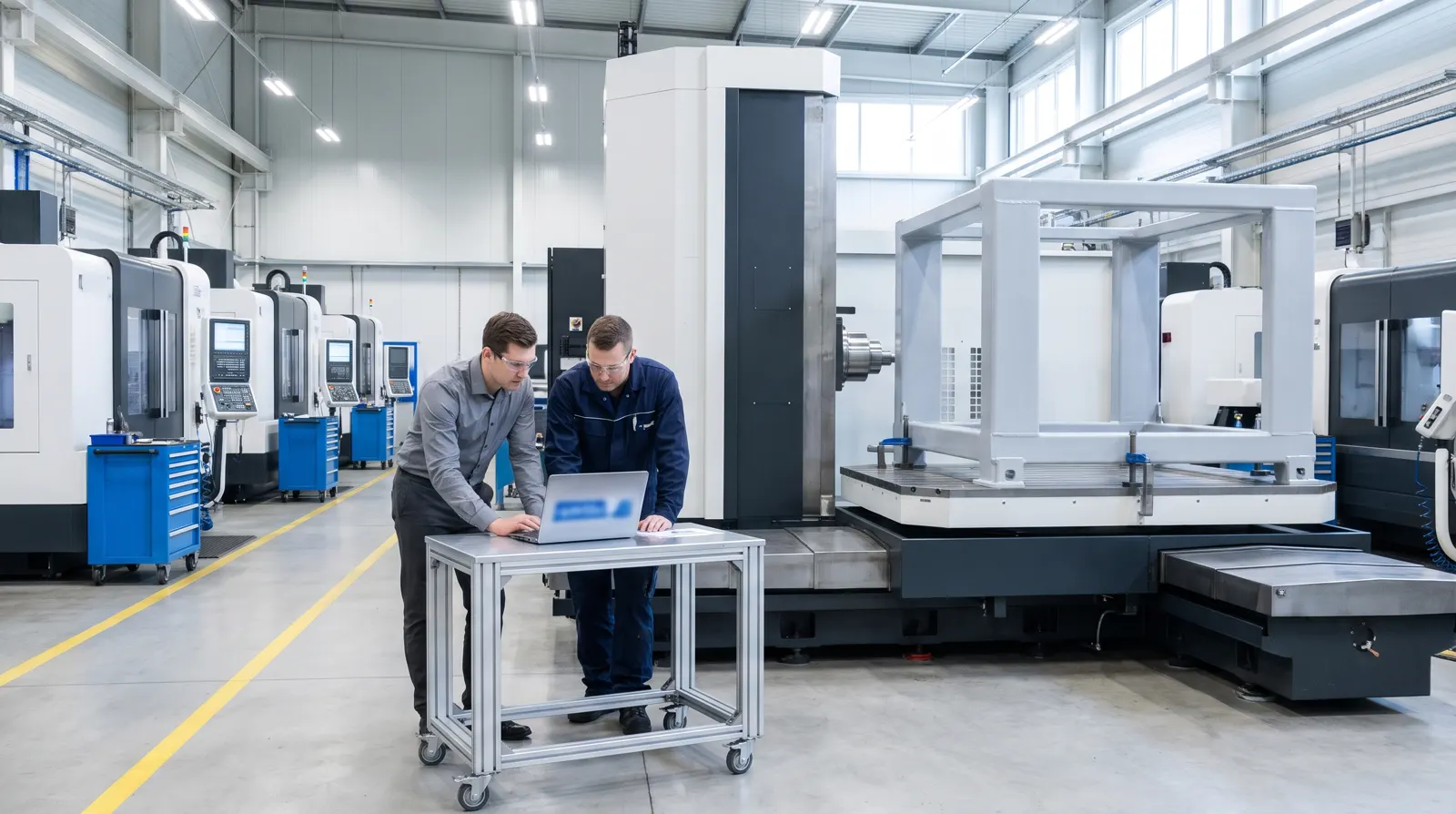
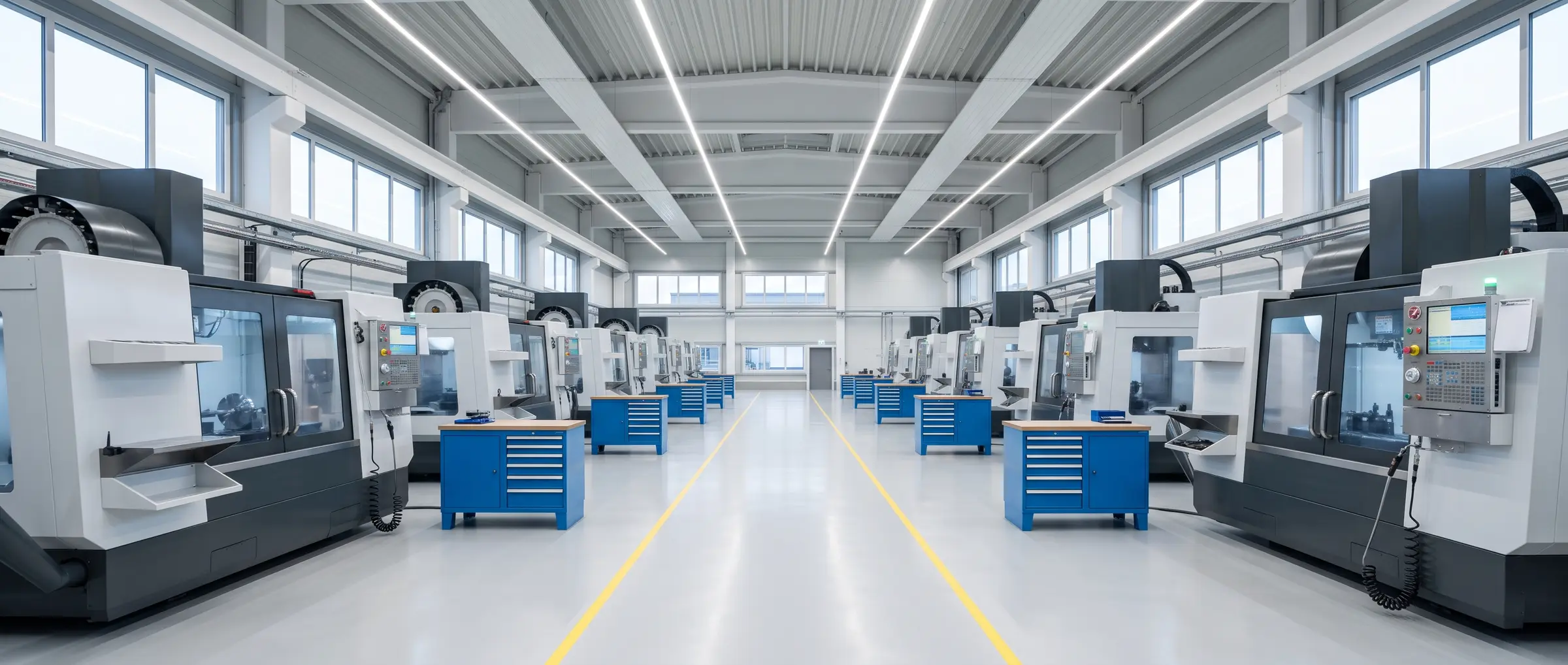
A supplier of gearbox components in Lower Saxony, about 120 people. Housings and base plates go on a horizontal boring mill with a Heidenhain TNC 530. Covers, brackets and flanges go on the machining centres, shafts and bushings on the CNC lathes. Steady customers: Kvantor Energo, Tessalit Maschinen, Nordhavn Pumps, Altuma Drives.
At twenty past nine the buyer at Altuma Drives rings the plant manager. They need a batch of gearbox covers, urgently. Can the plant ship by the 14th?
How that question used to be answered
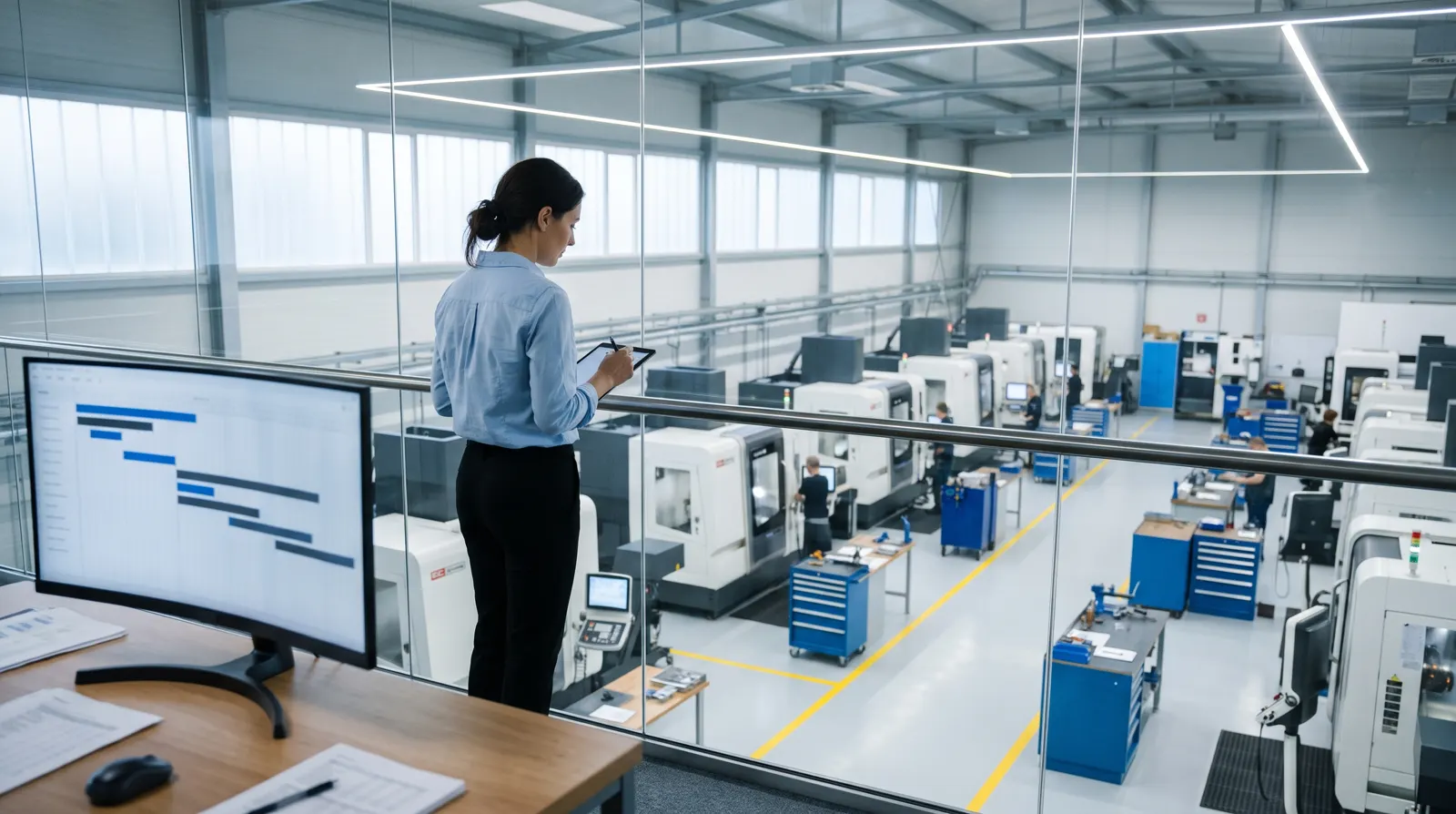
The honest answer used to be “I’ll call you back”. Then a walk down from the mezzanine office: the foreman on the machining centres, the operator on the boring mill, the whiteboard by the tool store, the spreadsheet that was right on Monday. Everyone has a piece of the picture. Putting it together takes most of the day, and the answer is still a feeling: probably yes.
And the real question behind “can you ship by the 14th” is a different one: what else moves if we say yes?
How it went in Metallovy
The plant view. The Plant section opens on The plant now. Along the top: orders in work, average progress, machine load for the next seven days, deadlines at risk. Below, every order with its percentage ready and a plain label: on time, at risk, or how many days late. The percentage is not a guess: it is the finished operations, weighted by their estimated hours.
Each machine shows its state — running, idle, off shift — and its queue. The machining centre where the covers would go is busy for most of the week.
The hours. For a what-if he needs rough hours, and those come from people. The lead programmer has made a similar cover before. Its setup sheet in Metallovy gives the cutting time from the feeds; he adds what the sheet does not count — rapids, tool changes, measuring — from experience. Preparation, setup, machining, inspection: four numbers.
The what-if. In the Plan section, next to the machine plan, sits a small form: What if: a new order. Name, machine, hours for machining, setup, preparation and control, the customer’s due date. He enters the covers on the machining centre, due the 14th, and presses Calculate.
Can be delivered: the 17th. Too late.
He ticks Urgent: before the orders that have not started and calculates again.
Can be delivered: the 12th. Orders that move: 2. Dashed bars on the plan show where the covers would run. Kvantor Energo’s adapter plates move by a day and stay on time. The second line is the one that matters: Altuma Drives’ own support brackets would be a day late.
Nothing has been saved. The screen says so: this is a calculation, the plan is not changed.
The call back. He rings the buyer back the same morning with an answer that has dates in it. The covers can leave on the 12th; then the brackets arrive a day after their date. Which comes first? The buyer picks the covers. The decision belongs to the manager and the customer. The plan only showed what each choice costs.
The tablet at the STOP. Over the next days the percentages move because the operators move them. On the
boring mill, a gearbox base plate for Nordhavn Pumps is running. Its program was prepared in Metallovy, and
each operation is one step of that program between two STOPs. The tablet by the machine shows the step in
hand:
Operation 4 of 14 · T111 PL.SVERLO-14 · 8 holes · cycle 203 · depth 43 mm · S2200 F180
Below are links to the setup sheet, the .H program and the drawing, and one big button:
Operation finished. The program already stops after every tool, so that STOP is the natural moment. One tap,
the time is written by itself, and the next operation starts. In the office, the base plate’s percentage
moves on, and so does the plan.
What this first version does not do yet
The plant layer is a first version, in early access. So far it runs on demo data; this story shows how it is meant to work in a real plant. What is missing:
- no logins and roles yet;
- weekends and holidays are not in the calendar;
- orders and operations are entered by hand, not yet from the screens; the what-if only calculates and never writes into the plan;
- progress comes from operators’ taps, not from the control: automatic progress from the Heidenhain control is in development;
- every hour in the plan is a person’s estimate, and the plan is only as good as those estimates.
What changed
The manager did not answer with a feeling. He answered with a date and with its price, and the price went to the one person who could decide whether to pay it: the customer.
Nobody at the machines had to stop to say how far along they were. The tap at the STOP said it for them.
And when the plant view shows a percentage, everyone knows what it means: operations finished, weighted by
their hours, nothing more.
The covers left on the 12th. The brackets followed a day after their date, as agreed on the phone.